


It’s 3:00 PM in Cape Coral, humidity is near 90%, and your thermostat is completely blank. That sudden silence from your AC is enough to stress any Southwest Florida homeowner.
At Non-Stop Air, “AC not turning on” is one of the most common emergency calls we see — and in most cases, the cause is something fixable.
Before you worry about a total system failure, identify the specific symptom. Most issues fall into three categories: a dead thermostat display, an indoor fan running without the outdoor unit, or a system that starts then stops immediately due to safety protections.
If you smell burning or see sparks, shut the power off and call (239) 990-5399 right away. Otherwise, these checks take about 15 minutes and help you understand how air conditioning systems work so you can restore cooling — or call a pro with the right information.
Call (239) 990-5399 for 24/7 AC Repair
Is It a Quick Fix? Use This Simple AC Decision Tree
Is your home starting to heat up because the AC won’t kick on? Before you pay for an emergency service call, use this simple decision tree to isolate the problem.
- Thermostat display blank? Likely a power or battery issue
- Indoor fan running but no cooling? Problem may be at the outdoor unit
- Is the outdoor unit completely silent? Possible electrical or safety shutdown
Start by checking your thermostat. Make sure it’s set to COOL with the fan on AUTO, and that the temperature is at least 5 degrees below the current room temperature. If the display is blank, replace the batteries.
Next, check your circuit breakers for both the indoor unit and outdoor condenser. If a breaker trips twice, stop and call a professional — forcing a reset can damage your system.
Then inspect your air filter. A clogged filter can cause coils to freeze and shut the system down. If you see ice on the lines, turn off cooling and run the fan to thaw the unit. Routine AC maintenance helps prevent these issues before peak summer heat.
If everything indoors looks normal but your system still won’t start, a common hidden issue in Florida is the condensate float switch.
Related Article: How Long Do AC Units Last in Florida? Lifespan Guide

The Humidity Trap: Why a Clogged Drain Line Stops Your AC
You might assume an AC that won’t turn on is facing a multi-thousand dollar compressor failure. In Southwest Florida, the culprit is often just a few ounces of algae. Because our air is thick with moisture, a typical Cape Coral AC unit pulls up to 20 gallons of water out of the air every single day. If that water can’t exit through the PVC drain line, a safety device called a float switch physically cuts power to the system to prevent a flood in your utility closet or attic.
Signs of a Float Switch Shutdown
- Standing water in the secondary drain pan under your indoor unit.
- A damp, musty smell near the indoor air handler.
- The system shut off abruptly after running perfectly for hours.
- The thermostat calls for cooling, but the outdoor unit stays silent.
The Shop-Vac Fix
If you see water in that pan, you can often restore cooling yourself using a shop-vac and basic household items.
- Power Down — Turn the system off at the thermostat and the circuit breaker.
- Locate the Line — Find the white PVC drain pipe outside and the indoor cleanout “T” joint near your air handler.
- Vacuum the Clog — Secure your shop-vac hose to the outdoor end using a wet rag to create an airtight seal. Run the vacuum for two to three minutes.
- Flush the Line — Pour about a gallon of fresh water into the indoor cleanout while the vacuum runs outside to flush it clean.
- Test — Once you see clear water flowing into the vacuum, remove the hose, refill the P-trap with water, and restore power.
If the pan is still overflowing or water is near electrical components, skip the DIY and call Non-Stop Air immediately. To prevent a recurrence, a preventive maintenance plan includes professional line flushes every season. For any AC service beyond what a shop-vac can fix, our team is available 24/7.
Schedule a Maintenance Visit Today
Outdoor Unit Troubleshooting: Why Your AC Won’t Kick On
Electrical component failures account for a large share of no-cool calls during Southwest Florida summers. (Note: industry figures vary — ask your technician what they see most often in your area.) If you find your AC not turning on outdoors, listen for these specific symptoms to narrow down the cause:
- The indoor blower runs but the outdoor unit is silent.
- The outdoor unit clicks or hums but the fan and compressor won’t start.
- The outdoor fan spins but the compressor is silent, or vice versa.
Step 1: Check Power Basics
Confirm your circuit breaker hasn’t tripped and that the outdoor disconnect switch is firmly seated. Perform a visual inspection only. If you see charred wires, heavy corrosion, or pest damage, stop immediately — these are fire hazards that require professional attention.
Step 2: Common Part Failures
Most dead units in Cape Coral have a failed capacitor or contactor. The capacitor provides the electrical push to start the motors. When it fails, you often hear humming while the unit sits still. The contactor is the physical switch that pulls in high-voltage power. If it clicks but the unit stays off, the internal contact points are likely pitted or burnt.
Know the Safety Boundary
Capacitors store a dangerous high-voltage charge even after the power is disconnected. Do not open the service panel unless you are trained to discharge them safely. If you have a multimeter and electrical experience, confirm whether a 24-volt control signal is reaching the unit from the thermostat before checking high-voltage components.
Hard Start Kits vs. Capacitors
A capacitor is a standard requirement for every system. A hard start kit is an assist device that helps older, struggling compressors kick on faster. While it can extend the life of an aging system, it is not a permanent fix for a failing compressor and is no substitute for a healthy capacitor.
Non-Stop Air offers same-day AC repair with 24/7 availability. If any of the symptoms above match your system, call or book online to get a tech out today.
Call (239) 990-5399 for Same-Day AC Repair
What to Check When the Thermostat Calls but the AC Won’t Turn On
You set your Nest to 72 degrees and hear the familiar click, but the outdoor unit never hums to life. In Southwest Florida, smart thermostats like Nest or Ecobee rely on a steady 24V power supply that can be interrupted by minor safety issues.
If your display is blank or shows a power error, the culprit is often a blown three-amp or five-amp low-voltage fuse on the control board. Other common causes for a system that won’t trigger include:
- Air Handler Door Switch: If the access panel is loose after a filter change, the safety interlock keeps the system off.
- C-Wire Issues: Without a dedicated common wire, power-stealing thermostats often shut down during peak Florida heat.
- Float Switches: If your drain line clogs, an upstream safety switch cuts the cooling circuit to prevent a flood.
Before calling for air conditioning repair, make sure the air handler panel is fully seated and replace the thermostat batteries. If the display stays blank while your breakers are on, you likely have a low-voltage transformer or fuse problem.
If you’re still stuck, here’s how to make your service call count.
How to Solve Your AC Not Turning On Emergency
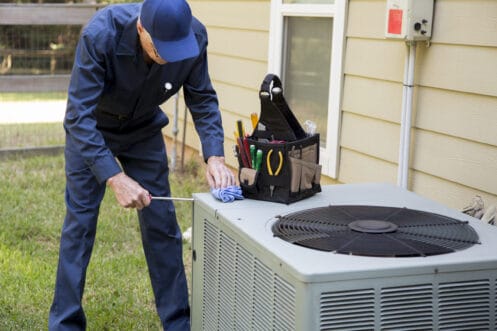
In the Southwest Florida heat, AC failures are usually triggered by safety shutdowns or small components failing under the strain of 90-degree days. Use this framework to determine your next move.
- Thermostat blank but breakers are on: You likely have a blown low-voltage fuse or transformer. This requires a professional diagnosis.
- Standing water in the drain pan: Clear the line with a shop-vac. If the system stays off after the pan is dry, the float switch itself may be faulty.
- Indoor fan runs but outdoor unit only clicks: This is almost always a failed capacitor or contactor.
- Burning smells or repeatedly tripping breakers: Turn the system off at the panel. This is a fire hazard — don’t restart it.
To get the fastest fix, tell the dispatcher your thermostat brand, what is currently running, and if you see ice or water. Mention if the problem started after a power outage or filter change. This helps the Non-Stop Air team arrive prepared. If you need a technician at your Cape Coral home now, book an AC repair online or call (239) 990-5399 for 24/7 support.
Related Article: What to Do When Your AC Is Leaking Water
Frequently Asked Questions
My thermostat is set to cool but the AC won’t turn on — what’s the first thing to check?
Start by confirming the thermostat is in Cool mode and the setpoint is several degrees below the current room temperature. Check the display for power and make sure the indoor air handler wall switch is in the On position. If the screen is blank, the issue is often a tripped breaker or a blown low-voltage fuse on the control board.
Why is my indoor fan running while the central air is not turning on outside?
When the indoor blower works but the outdoor unit is silent, the cause is usually a tripped outdoor breaker, a clogged drain line, or a failed capacitor. Safety float switches often cut power to the condenser specifically to prevent water overflows. If the exterior unit clicks but won’t start, the capacitor likely needs professional replacement.
My AC won’t turn on after a power outage — did something break?
Power surges during a storm can trip circuit breakers or damage sensitive capacitors and control boards. Reset your AC breakers by flipping them completely Off and then back On at your electrical panel. If the breaker trips again immediately, stop troubleshooting and keep the power off to prevent further electrical or motor damage.
How do I know if a clogged float switch is stopping my air conditioner?
Check the secondary drain pan under your indoor air handler for standing water. If the pan is wet or the safety switch is floating, the system kills power to the outdoor unit to prevent a home flood. This is very common in Southwest Florida. Clearing the line with a shop-vac often restores operation immediately.
Can a dirty air filter really cause my AC unit not to turn on?
A clogged filter restricts airflow, causing the evaporator coil to freeze into a block of ice. Many modern units have sensors that trigger a safety shutdown when they detect icing or excessive high pressure. Change the filter and let the unit thaw completely — several hours at minimum — before attempting a restart.
When should I stop DIY troubleshooting and call a professional?
Call a professional immediately if you smell burning, hear grinding, or see sparks. If your circuit breaker trips a second time after a reset, forcing a restart can destroy your compressor or cause a fire. For safe, expert help, the Non-Stop Air team offers 24/7 AC repair throughout Southwest Florida — call (239) 990-5399 or request service online.